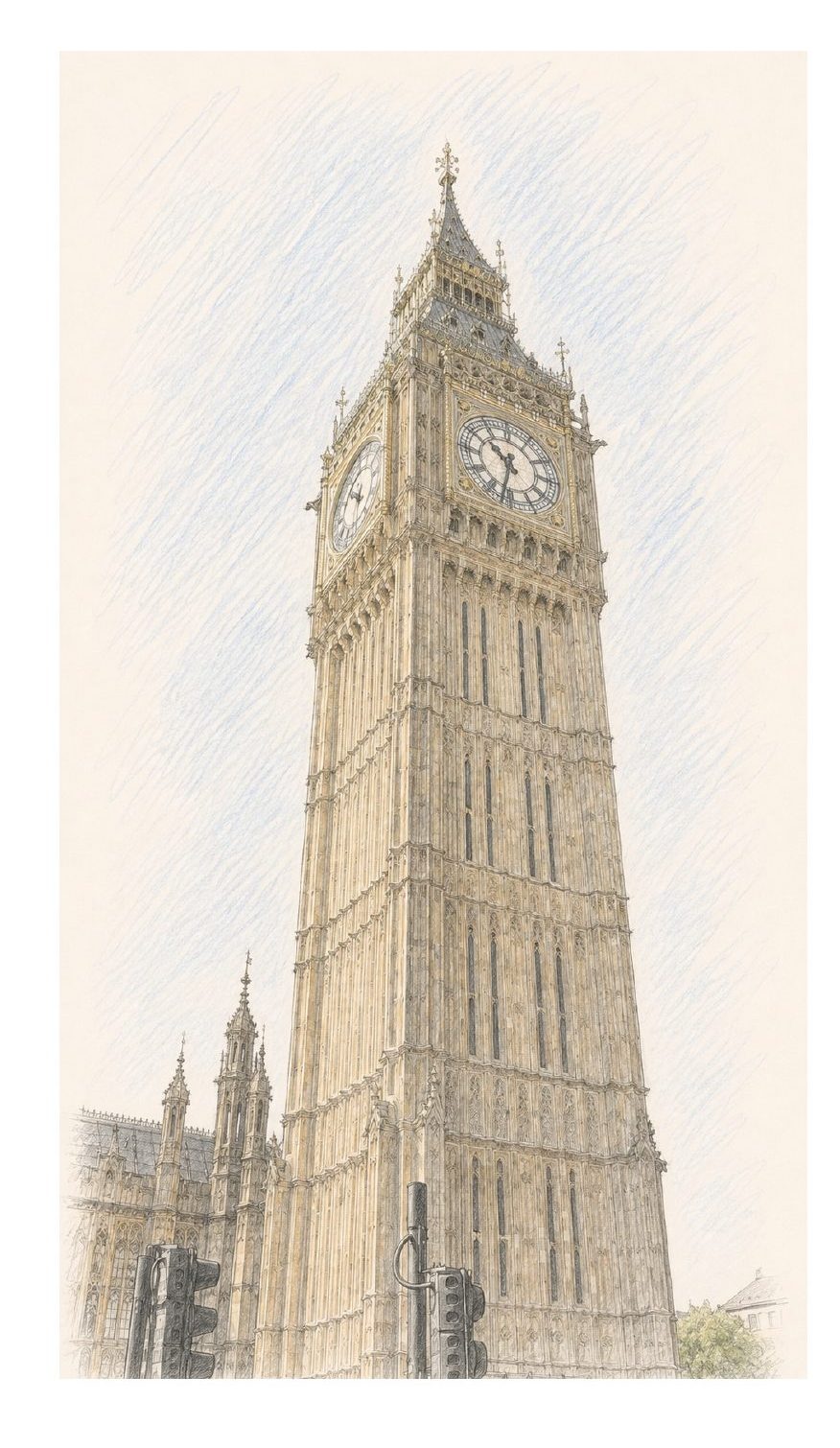
We left Reggio Calabria on 6 August, hoping to escape the heat.
Ironically, we were flying to London.
I had not been back since 2019, and I was curious — and perhaps a little apprehensive — to see the city again. Seven years is a long time, especially in a city like London, where change seems to happen at an almost frightening speed.
But this time, London was not really the destination.
The real reason for our trip was much more important: we were going to meet our first granddaughter.
In May, Charles’s daughter, Daisy, had given birth to a beautiful little girl, Evie. And so, after months of waiting, we finally got to hold her.
We stayed for about a week in South London, near our family, and had the chance to see some old friends too. It was a lovely mixture of new emotions and familiar faces, of memories and discoveries.
And London certainly gave us plenty to think about.
The new London
One of the first things that impressed me was how much London has changed since 2019.
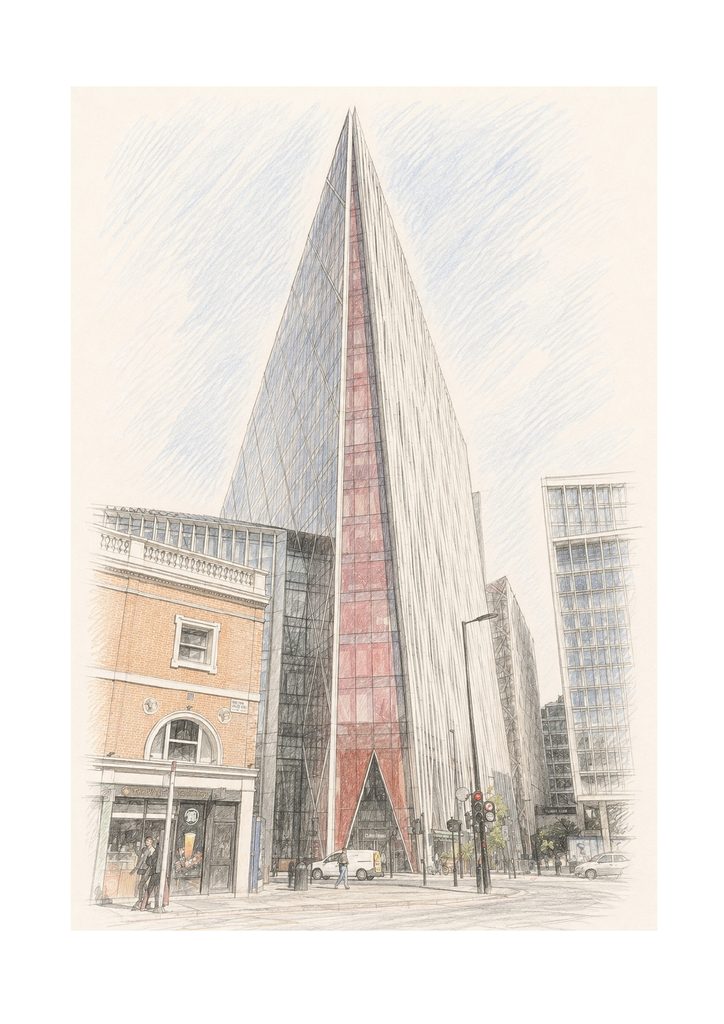
Property development seems to be everywhere. New buildings, new towers, new construction sites, new neighbourhoods rising almost overnight. The London skyline is increasingly filled with skyscrapers, and the contrast between the old and the new is sometimes extraordinary.
This is, of course, nothing new for London. The city has always reinvented itself. But this time the scale of the transformation felt different.
And then there was something that made me unexpectedly proud.
Nduja.
Yes, nduja seems to be everywhere.
As a Calabrian seeing something so deeply connected with home appearing on menus all over London was satisfying. Once upon a time, you had to explain what nduja was. Now it seems that everyone knows it.
A city under pressure
There was another side to the new London, and this one was much less exciting.
The economic crisis is visible.
What struck me most was the growing gap between central London and the outskirts. London has always had inequalities — this is hardly news — but the distance between different parts of the city seems to have become even more marked.
In the centre, there is wealth, investment, construction, expensive shops and restaurants, international visitors and an extraordinary amount of money circulating.
Further out, things can feel very different.
The South London I remembered seemed, in many ways, poorer than before. The contrast is difficult to ignore. And perhaps this is one of the most important things I took away from the trip: a city can be booming and struggling at the same time.
But there was another change I found surprisingly sad.
During our week in London, I travelled on trains, the Tube and buses several times. I kept looking around me, almost instinctively, because I remembered a completely different scene.
When I lived in London, until 2009, commuters read.
They read books, newspapers, magazines. They read sitting down, standing up, squeezed between other passengers, sometimes holding a book above their heads as the train rattled through the city. Reading was simply part of commuting.
This time, almost everyone was looking at a phone.
No books. Almost no newspapers. No magazines.
Just screens.
Of course, I am not suggesting that people have suddenly stopped reading. They may well be reading on their phones. But it felt different. The physical presence of a book or magazine has almost disappeared from public transport, replaced by an endless stream of messages, videos, social media and notifications.
Perhaps this is one of the clearest signs of how much our life has changed.
When I lived in London, commuting seemed to create a small private space in the middle of a crowded public one. You could disappear into a book for half an hour.
Now, even when people are physically alone with themselves, they seem to be constantly connected to everyone and everything else.
I found that strangely sad.
The climate is not waiting for us
But the thing that really shocked me was not the buildings, the prices, the economic differences — or even the phones.
It was the climate.
London without rain feels wrong.
We were told that it had not rained properly for around three months. Three months.
The grass was dry and brown. The landscape had lost that particular English green that, for someone from the Mediterranean, has always been part of the mythology of the UK.
Climate change is not something that might happen in the future. It is happening now.
Governments really need to get this into their heads.
We talk about climate change as if it were a distant problem that belongs to our children or grandchildren. But when you stand in what should be a green English landscape and see dry grass after months without rain, the concept suddenly becomes very concrete.
You don’t need a scientific report to understand that something has changed.
You can see it.
And then there is the London that remains
And yet, despite everything, some things were reassuringly familiar.
The chaos.
The pubs.
The drinks.
That wonderful British ability to sit in a pub with a drink in your hand and, for a few hours, feel that perhaps all the world’s problems can wait until tomorrow.
There was still that sense of movement, noise and people coming and going. London still has its particular energy — slightly mad, occasionally exhausting, but unmistakably alive.
London, again
So, what did I find when I went back to London after seven years?
A city that has changed enormously, but that is still recognisable.
A city building upwards while, in some places, people are struggling to keep up.
A city where the old and the new exist side by side — sometimes beautifully, sometimes awkwardly.
A city where you can find nduja on a menu, pay for everything without taking out your wallet, and see another skyscraper appearing on the horizon.
A city where people no longer seem to read on the Tube, where screens have replaced books, and where the consequences of economic inequality and climate change are becoming increasingly difficult to ignore.
And yet, the pubs are still full.
The drinks are still flowing.
The city is still chaotic, noisy and wonderfully alive.
And, for us, London will now always have a new meaning.
Because this time we didn’t simply return to London.
We went there to meet Evie.
And somehow, that made seeing the city again — with all its contradictions, problems, memories and surprises — even more meaningful.